Tongue twisters for voice actors, sorted by the sound the mic hears
On stage, a smeared consonant gets lost in the room. On a microphone a few inches from your mouth, it doesn't: a hard P pops, an S hisses, a final T disappears, and the engineer hears all of it. These tongue twisters for voice actors are grouped by the sounds a mic is hardest on, with a drill built for the booth: precision at low volume first, because most voice work is closer and quieter than theater. For the general stage list, with a different set of phrases, see tongue twisters for actors.
Why the mic changes the drill
A stage actor drills diction to reach the back row. A voice actor drills it to survive close listening. Three things are different at the mic:
- Volume is lower. Commercial, narration and conversational reads sit close to speaking level. Consonants that are crisp when you project often go soft when you pull back. The drill has to hold precision at a quiet level.
- Air is audible. Plosives (P, B, and to a lesser degree T, D, K) push a burst of air into the capsule. A pop filter helps, but a controlled release helps more.
- High frequencies are exposed. S, Z, SH and CH sit in the range where a bright mic and a close distance turn a normal sibilant into a hiss. Editors can tame it afterward; a cleaner source is always better.
The booth drill: quiet, working level, full energy
- Quiet and exact. Say the line at a near-whisper, every consonant landed. If a sound only works when you push, it isn't placed yet. Three times.
- Working level, working distance. Normal conversational volume, at the distance you actually record from. Three times. Listen for pops and hiss, not just for errors.
- Full energy. Once, at the level of an animation or promo read, without leaning into the mic. Energy should come from breath and intention, not from getting closer.
Speed comes last and matters least. Clients rarely need you fast; they need you clean on the first take, and again on take twelve. If you can, record one pass through your own mic and headphones: that is the only way to hear what the microphone hears.
P and B: controlled plosives
The goal is not to soften every P into mush. It is to release the lips with intention instead of firing air at the capsule. Keep the jaw loose and let the lips do the work.
- A proper copper coffee pot.
- Bad money, mad bunny, bad money, mad bunny.
- Bobby brought a big bowl of baked beans back.
- Pack the pale blue paper by the back porch.
Mic check: say the first line on-axis at working distance, then a few degrees off-axis. If the pops vanish off-axis, placement solves most of it. If they don't, ease the burst of air, not the consonant.
S, Z and SH: sibilants without the hiss
Harsh sibilants usually come from too much air pressure, not from the tongue alone. Aim for a lighter, narrower S, and let the Z buzz rather than hiss.
- Selfish shellfish.
- Which wristwatches are Swiss wristwatches?
- Sixty-six sisters sewed silk sashes slowly.
- Zoe's sister sees zigzag zebras.
Mic check: listen on headphones for the S that sticks out above the rest of the sentence. That word is the one to repeat, quietly, until it sits at the same level as its neighbors.
T and D: the endings the mic drops
Final T and D are the first casualties of a quiet read. “Don't” becomes “don,” “and” becomes “an.” On stage the context saves you; in a tight commercial read, the copy says exactly what the client paid to say.
- Toy boat, toy boat, toy boat.
- Pat bought eight flat white hats.
- Ted didn't need the red sled.
- Don't dart down the dark dirt road at dusk.
Mic check: record “Ted didn't need the red sled” at your quietest working level. Every D should be audible on playback, without a puff of air behind it.
K and G: the back of the tongue
Back plosives get lazy when the jaw is tight, and they can pop too. Keep the throat open and the release short.
- Greg's quick cat caught a gray goose.
- Good cookies could be cooked by a good cook if a good cook could cook good cookies.
- Clean clocks click and keep counting.
Clusters and tricky transitions
Consonant clusters are where copy trips you mid-take: product names, addresses, tech terms. These are the twisters that most resemble real scripts.
- Unique New York, unique New York.
- Irish wristwatch.
- Black background, brown background.
- Bright brass bracelets cross the crowded street.
Liquids, nasals and the mouth: l, r, m, n
L and R swap at speed; M and N blur into a hum. These are also good lines for noticing mouth noise, since clicks tend to show up on quiet, sustained sounds.
- Truly rural, truly rural.
- Eleven benevolent elephants.
- Lily rarely relied on rolling rails.
- No need to knead the noodles now, Nora.
Finish any session with the old reset line, slowly and quietly: “The lips, the teeth, the tip of the tongue.” If it sounds clean at a whisper, you're ready for the first take.
Turn a twister into a real read
Twisters are scales, not songs. After two minutes on your weakest family, take the hardest line of the actual script, the one with the product name or the run of S sounds, and give it the same three passes: quiet, working level, full energy. That is the line that will cost you a retake, and it's worth more than ten twisters at speed. If you're working in an accent for a role, the same recording shows which consonants of that accent still slip; see practicing lines in an accent. For breath and resonance before a session, see how to warm up your voice before rehearsal.
Getting scored on a sound family
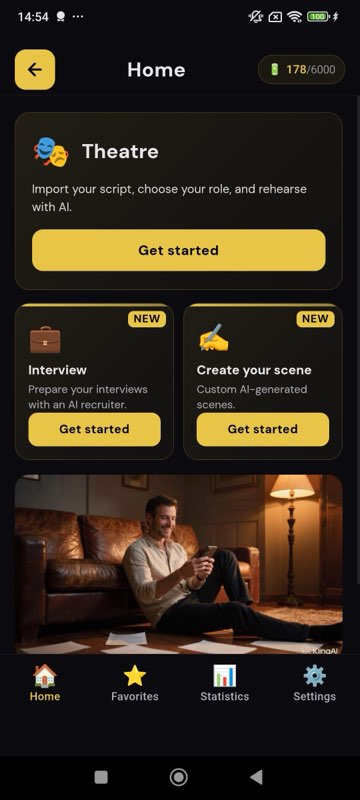
MasteringTheatre's diction exercise (Pro and Premium plans) works by sound family too, with the app's own categories such as Labial plosives (p, b), Dental plosives (t, d) and Velar plosives (k, g), a time limit (Less time, or No limit) and a strictness level. At the mic, know what it measures: the exercise scores the words, not the pops or the sibilance. A line can score well and still pop, so the mic checks on this page stay with your headphones. How the exercise works is described on the tongue twisters for actors page.
Voice actor tongue-twister questions
What are the best tongue twisters for voice actors?
The ones that target the sound your mic exposes. Record a few lines from each family on this page at working level, listen on headphones, and drill the family that pops, hisses or drops first. For most people that is P/B or S.
How is this different from the stage tongue-twister list?
The phrases are different, and so is the drill: quiet first, then working level, then full energy, instead of building up to back-row volume. The stage list lives at tongue twisters for actors.
Do tongue twisters stop mic pops?
They train a controlled release of P and B, which reduces pops at the source. Mic placement and a pop filter do the rest. Neither replaces the other.
Should I do tongue twisters before every recording session?
A short set, yes: two minutes on your weakest family, then the hardest line of the script. Long, fast drills right before a session tire the mouth more than they help.
Does the app listen to my mic sound?
No. It checks whether the words were recognized as said, with the strictness you choose. Pops, sibilance, mouth noise and tone are for your own ears, your headphones and a voice coach.
Import one page. Run one line. See a % score.
Free plan, no card. Android (10 languages) and iOS (5 languages). Pro and Premium: monthly, price shown in the store.

This page describes the app as it was on 2026-11-21. A score measures text accuracy, not talent. Published 2026-11-21.